Can Two Agents Draw One Stair Sheet in Rhino?
Two Claude agents drew one stair sheet in Rhino 9, 13 runs. With the rhino-fineline skill 4 of 11 passed all 26 checks; without it, two scored 18 and 22.
The question and the answer
The question: can two Claude agents draw one dimensioned stair sheet together in Rhino 9, and does the rhino-fineline skill help?
The answer: yes with the skill, imperfectly. All 11 runs with the skill produced a real sheet with both agents’ linework in all three views, and redrew it after a mid-run change of scale. Four of the 11 passed all 26 checks. Two Haiku runs without the skill scored 18 and 22 of 26, with linework misplaced or missing.
| Model | Arm | Skill | Runs | Checks passed, of 26 | Mean cost per run |
|---|---|---|---|---|---|
| Haiku 5.5 | Notes | On | 4 | 22, 23, 26, 24 | $0.122 |
| Haiku 5.5 | Notes plus channel | On | 4 | 24, 26, 25, 25 | $0.113 |
| Sonnet 5.5 | Notes | On | 1 | 25 | $1.032 |
| Sonnet 5.5 | Notes plus channel | On | 1 | 26 | $1.395 |
| Opus 5.5 | Notes | On | 1 | 26 | $2.623 |
| Haiku 5.5 | Notes | Off | 1 | 18 | $0.182 |
| Haiku 5.5 | Notes plus channel | Off | 1 | 22 | $0.217 |
13 valid runs of 2026-11-12. Costs are the command-line tool’s own totals. There was no Opus run with the channel.
How to read it
- Run. One five-round drawing by two agents, each in its own Rhino 9 document. Steps draws the stair and dimensions riser, going and total rise. Rail draws the railing, dimensions handrail height and writes the keynote legend.
- Change order. At round 3 the scale goes from 1:32 to 1:24, so everything drawn must be redrawn, and both sheets must end stamped revision 2.
- Notes and channel arms. In both, requests and replies are notes in the model. The channel arm adds a shared text file both can read and post to.
- Checks and passed. A script with no model checks 26 things in seven groups: views, scale, dimensions, annotations, ownership, sheet and communication. “Checks passed” is how many held on the final sheet and PDF.
- Skill on and off. With the skill, the
rhino-finelinelibrary is loaded into each document and its text is part of the brief. Without, the agents had to write projection, linework and cuts themselves.
Set-up
| Item | What we used |
|---|---|
| Models | claude-haiku-5-5 (10 runs), claude-sonnet-5-5 (2) and claude-opus-5-5 (1). The same model ran both agents. Sampling settings were the command-line defaults, which we did not verify. |
| Skill | Arch Studio’s rhino-fineline, as a Python library plus its text in the brief, not as an installed skill. Both agents also had a small helper API we wrote, including a page-space dimension helper that a user of the skill would not have. |
| Rhino | Rhino 9.0.26300 on a Mac, headless documents only; two or three runs at once against one Rhino. |
| Starting point | The finished stair from our two-agent stair test, 160 in floor to floor. It does not change; only the drawing does. |
| Limits | $10 total for the series; 8 minutes per session. |
| Given to the agent | A control file fixing sheet size, scale, frames, views and section plane, plus the briefs. |
| Run date | 2026-11-12. Times are local, inferred from file times. |
| Data | The harness and run files are not public; the write-up and six sheet images are. |
How we tested
Before any model run, eight checks tested the skill on a headless document. All passed, but five gaps needed a harness workaround; for example, page setup refused a document that was not the active one.
Each agent works on its own copy of one A1 landscape sheet: plan, section and elevation frames, a keynote legend and a title block. Each sees the other’s sheet only as last saved, so one round late. The harness merges both sheets into one PDF and checks it with the skill’s own PDF checker. The grader’s self-test agreed on all 15 cases (a good sheet, a harmless extra note, 12 broken sheets and a stopped run), and a scripted run passes 26 of 26. All 13 runs were regraded with the final grader.
What we observed
The sheet and the change order. Across the 11 skill-on runs the view checks passed 44 of 44 and the ownership checks 55 of 55. Both agents redrew at round 3 and both files ended at revision 2 with no dimension left from the old scale. No valid run had a clash between the agents’ text, dimensions or balloons.
Where they went wrong.
| Failure | Runs |
|---|---|
| Handrail-height dimension not measured from a nosing line (values 43.7 in and 59.4 in, or 35.9 in placed 62 mm from any nosing line) | 3 Haiku |
| View titles hanging about 1.5 mm below their frame | 2 Haiku |
| Requests left open or unanswered | 2 Haiku notes |
| Total rise dimensioned as 152 in, to the underside of the upper slab | 1 Haiku |
| Riser dimensioned as 6.900 in; the model has 6.957 in | 1 Sonnet |
| Section missing the landing, so 41 mm short on the page | 1 Haiku |
| Callout numbers used twice | 1 Haiku notes |
Notes against channel, Haiku with the skill.
| Notes | Channel | |
|---|---|---|
| Checks passed | 22, 23, 26, 24 | 24, 26, 25, 25 |
| Communication checks passed | 8 of 12 | 12 of 12 |
| Requests in the model per run | 5, 7, 3, 5 | 3, 3, 1, 2 |
| Runs with an extra full redraw | 3 of 4 | 1 of 4 |
In one notes run both agents picked callout numbers 1 and 2. Each saw the clash one round late and renumbered, more than once. They were still correcting each other in round 5 and ended with both using 1 and 2 and three requests open. Sonnet followed the same direction: 25 on notes, 26 with the channel.
Skill on and off, Haiku.
| Skill on (8 runs) | Skill off (2 runs) | |
|---|---|---|
| Checks passed | 22 to 26, mean 24.4 | 18, 22 |
| Mean cost per run | $0.117 | $0.200 |
| Mean agent time | 16.5 min | 35.4 min |
| Mean script calls | 65 | 130 |
| Mean script calls that errored | 12 | 32 |
Without the skill, the rail agent’s linework landed in the wrong place in all three views in one run, one view about 4 m off the sheet, and the section lost most of the stair. The other no-skill run had no section cut.
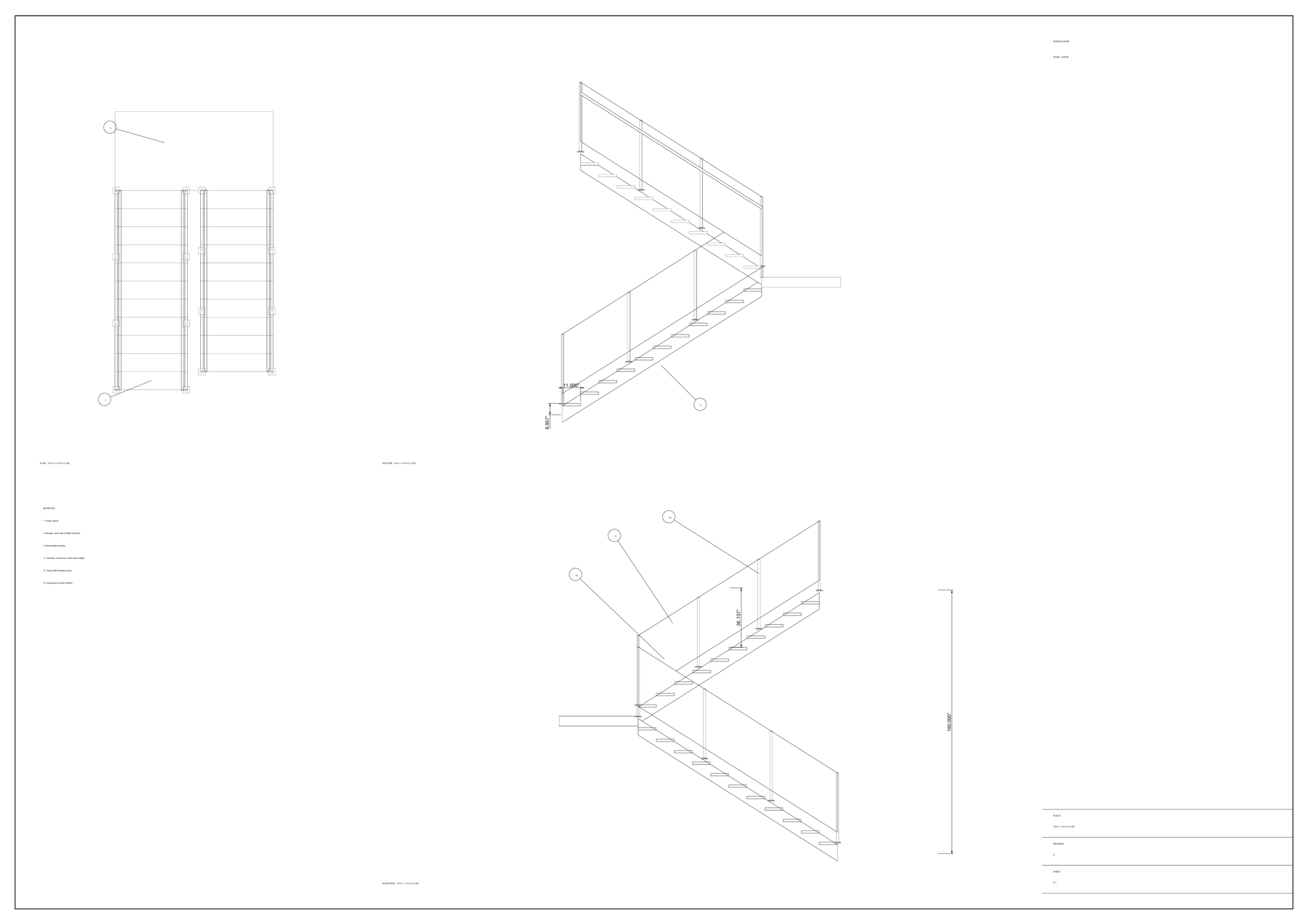
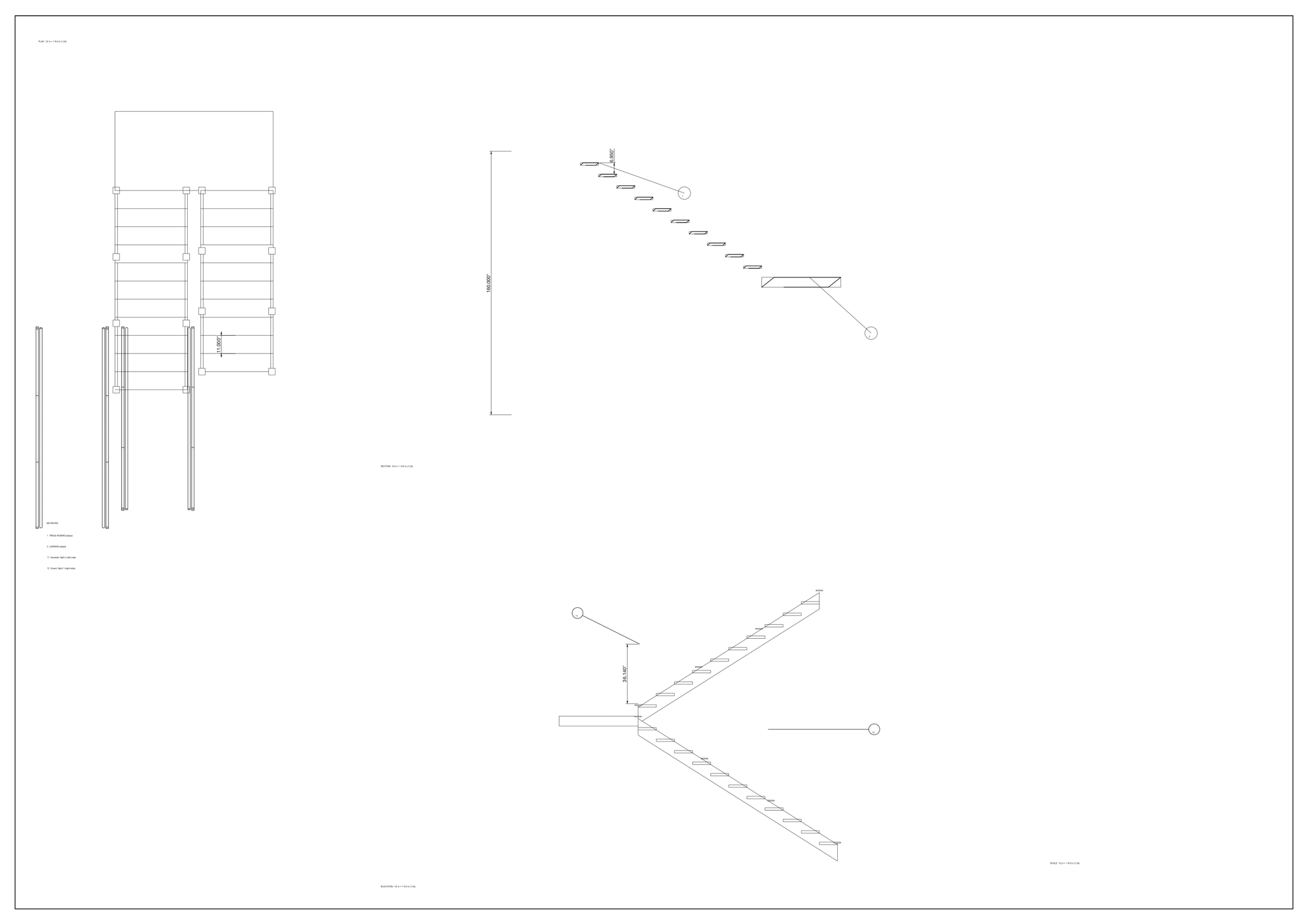
Models. Opus: 26 of 26, 2 script errors, $2.62. Sonnet: 25 and 26, $1.03 and $1.40. Haiku with the skill: 22 to 26, about $0.12. Only 2 of 8 skill-on Haiku runs were clean.
Spend. The 13 valid runs cost $6.39; voided attempts added $0.94, for $7.33 of the $10 cap.
Our reading
This is our interpretation.
The skill removed the linework failures and roughly halved calls and time. Cost fell by less, $0.117 against $0.200. It did not help with dimensions, which it has no function for, or with the callout negotiation. Two runs without the skill are too few to put a number on the difference in checks.
The channel reversed the result of the stair test, where the channel arm did worse on communication. The difference may lie in what the agents had to agree. On the stair, each could read the other’s geometry. On the sheet they had to negotiate a fact that isn’t geometry: which callout numbers each uses and what each means in the legend. With notes only, that negotiation can oscillate, because each side sees the other’s choice one round late. A channel lets one agent post numbers and the other read them in the same round. This is a mechanism that fits the runs; we did not test it. The brownstone test is the other place we have used notes in the model.
Not tested: an Opus run with the channel, other sheets or other changes, drawing quality, and printed output.
What this doesn’t show
- Records. The per-run records for this test were not kept, so the check counts here come from the published write-up and could not be recounted; run counts and most mean costs were recounted from the run logs.
- Small samples. Four Haiku runs per arm, one Sonnet per arm, one Opus run, and two without the skill. No confidence intervals.
- One sheet, one change order, five rounds.
- The grader doesn’t judge drawing quality. Leader placement, text size and line weights are not graded, and nothing was printed. The scale check compares bounding boxes, so a view drawn at the right size from the wrong side would pass. Dimension text was read from Rhino’s formatting, not parsed from the PDF; we compared one PDF by eye.
- The grader was fixed during the work, after seeing results, and all runs were regraded. Seven harness faults were fixed along the way.
- Times are inflated by runs sharing one Rhino.
- Unverified. Dollar figures against a price list; whether the model versions stayed unchanged; the cause of each script error; whether predictions were written beforehand. The skill-on and skill-off means and the token totals are our arithmetic from the run records.
What we take from it
With the skill, two agents split a drawing sheet and absorbed a scale change. The weak spots were what the skill doesn’t cover: dimensions and agreeing callout numbers. If two agents must agree on something that isn’t geometry, give them a channel as well as notes, and check the result against the sheet itself.
Full record: Two agents draw one stair sheet in Rhino 9 with rhino-fineline
More evals
Do our Rhino skills for Claude improve what AI agents produce in Rhino?
Not general modeling. A team using the skills ended coordinated in 3 of 3 runs on a split model, against 1 of 3 for trades alone.
Can two Claude agents build one Rhino model by leaving each other notes in it, and does a shared text channel on top of the notes help?
Notes were enough: all 12 runs built a correct stair, passing 21 of 21 geometry, fit and ownership checks. The channel did not help: on Haiku the notes arm passed 24 of 24 four times; the channel arm scored 24, 23, 22 and 23.